Showing posts with label math. Show all posts

Sunday, April 3, 2016

Rick F Guyon - Road Safety Features - Richard F Guyon

Road safety features are installed to protect public life and property and to reduce traffic-related lawsuits against highway and transportation departments. The most common actions include the installation of illumination, guardrails, and impact attenuators, as well as the relocation of dangerous facilities.
Guardrails are used on roadways where there is a severe slope or vertical dropoff to the side of the road, ditches, permanent bodies of water, embankments, and roadside obstacles. Guardrails with turned-down ends are now prohibited in new installations and should be upgraded. Such guardrails, rather than protecting motorists from a fixed impact or spearing, often cause vaulting and subsequent rollover.

Rick F Guyon | Richard F Guyon
Rick F Guyon - Richard F Guyon - Road Safety

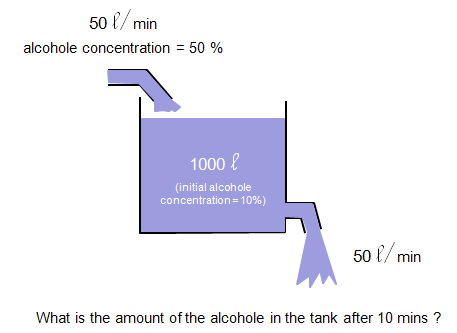
Rick F Guyon - Differential Equations - Application: Mixing - Richard F Guyon

A typical mixing problem involves a liquid-filled tank. The liquid may initially be pure or contain some solute. Liquid (either pure or a solution) enters the tank at a known rate. A drain may be present to remove thoroughly mixed liquid. The concentration of the solution the amount of solute at some given time is generally unknown.

Rick F Guyon | Richard F Guyon

Sunday, March 27, 2016

Rick F Guyon - Analysis of Accident Data - Richard F Guyon

Rick F Guyon - Accident data are compiled and evaluated to identify hazardous features and locations, set priorities for safety improvements, support economic analysis, and identify patterns, causes and possible countermeasures.
Accidents are classified into three severity categories,  depending on whether there is (a) property damage only referred to as PDO accidents, (b) personal injury, or (c) fatalities. The severity ratio is defined as the ratio of the number of injury and fatal accidents divided by the total number of all accidents (including PDO accidents).
It is common to prioritize intersections according to the accident rate, R. The accident rate may be determined for PDO, personal injury, and fatal accidents or the total thereof. The accident ratio is the ration of the number of accidents per year to the average daily traffic, ADT. The rate is reported as RMEV.
7-Acci1.jpg
Rick F Guyon - Vehicle Exposure - Richard F Guyon

Routes between points are prioritized according to the accident rate per miles, calculated as the ratio of the number of accidents per year to the ADT per mile of length, counting traffic from all directions in the intersection. For convinces, the rate may be calculated per 100 million vehicle miles.

Wednesday, March 23, 2016

Rick F Guyon - Braking and Deceleration Rate - Richard F Guyon

Rick F Guyon - Continuing on this series on Vehicle Dynamics is Braking and Deceleration Rate.

The maximum deceleration that can be developed in dry weather by a vehicle with tires and brakes in good condition is about 25 ft/sec. (Acceleration and deceleration are sometimes specified in miles per hour per second, or kilometers per hour per second. Multiply mphps by 1.467 to obtain ft/sec and multiply kphps by 0.278 to obtain m/s2. However decelerations of 14 ft/sec are experienced by occupants as uncomfortable and alarming. 11 ft/sec is the appropriate upper limit of desirable decelerations,  and approximately 9ft/sec is the maximum comfortable deceleration from high-speed travel.

Rick F Guyon - Richard F Guyon

Rick F Guyon - Stopping Distance - Richard F Guyon

Rick F Guyon - Stopping distance includes the distance traveled before the brakes are applied as well as the distance during the breaking manuever. The breaking perception reaction time is also referred to as the PIEV time, using an acronym for perception, identification, emotion, and volition. PIEV time varies widely from person to person. Though the median value is approximately 0.90 sec for unexpected events, individuals with slow reaction times may require up to 2.7 seconds. 2.5 seconds is the value used by AASHTO for determining the minimum stopping sight distances, the value that is appropriate for approximately 90% for the population.
Rick F Guyon - Richard F Guyon

Tuesday, March 22, 2016

Rick F Guyon - Coefficient of Friction - Richard F Guyon

Rick F Guyon  - In most cases, a vehicle's braking system is able to provide more braking force than can be transmitted to the pavement. Therefore, the maximum deceleration is limited by the coefficient of friction between the tires and pavement.
The coefficient of friction, f, between a vehicle and the supporting roadway is the frictional force divided by the normal force. The normal force is essentially the total weight of the vehicle, w , on all but the most extreme grades. The coefficient of friction is dependent on the condition of the vehicle's tires, the type and condition of the pavement, and the weather conditions. 
There are two coefficients of friction: static and dynamic(kinetic). The coefficients of friction may also be referred to as coefficients of road adhesion. The coefficients of static friction is larger than the coefficient of dynamic friction. While a vehicle's tires are rotating, the relative velocity between a point of contact on the tire and roadway are zero and the coefficient of static friction controls. 
Once a vehicle enters a skid, however the coefficient of dynamic friction controls. Therefore a vehicle is held to its maximum braking deceleration without entering a skid will take less distance to come to a complete stop than if the vehicle locks up its tires and skids to a stop. 
The coefficient of friction is not constant throughout the braking manuever, but varies inversely with speed. This level of sophistication is not normally considered, and an average value that is representative of the speed and conditions are used.
Rick F Guyon Richard F Guyon

Monday, March 21, 2016

Rick F Guyon - Refresher: Systems of Units - Dimensional Analysis - Richard F Guyon

Dimensional Analysis
Dimensional analysis is a means of obtaining as equation that describes some phenomenon without understanding the mechanism of the phenomenon. The most serious limitation is the need to know beforehand which variables influence the phenomenon. Once these are known or assumed, dimensional analysis can be applied by a routine procedure.
The first step is to select a system of primary dimensions. The dimensional formulas and symbols for variables most frequently encountered are given .
The second step is to write a functional relationship between the dependent variable and the independent variable.
Rick F Guyon
Rick F Guyon - Dimensional Analysis - Richard F Guyon